






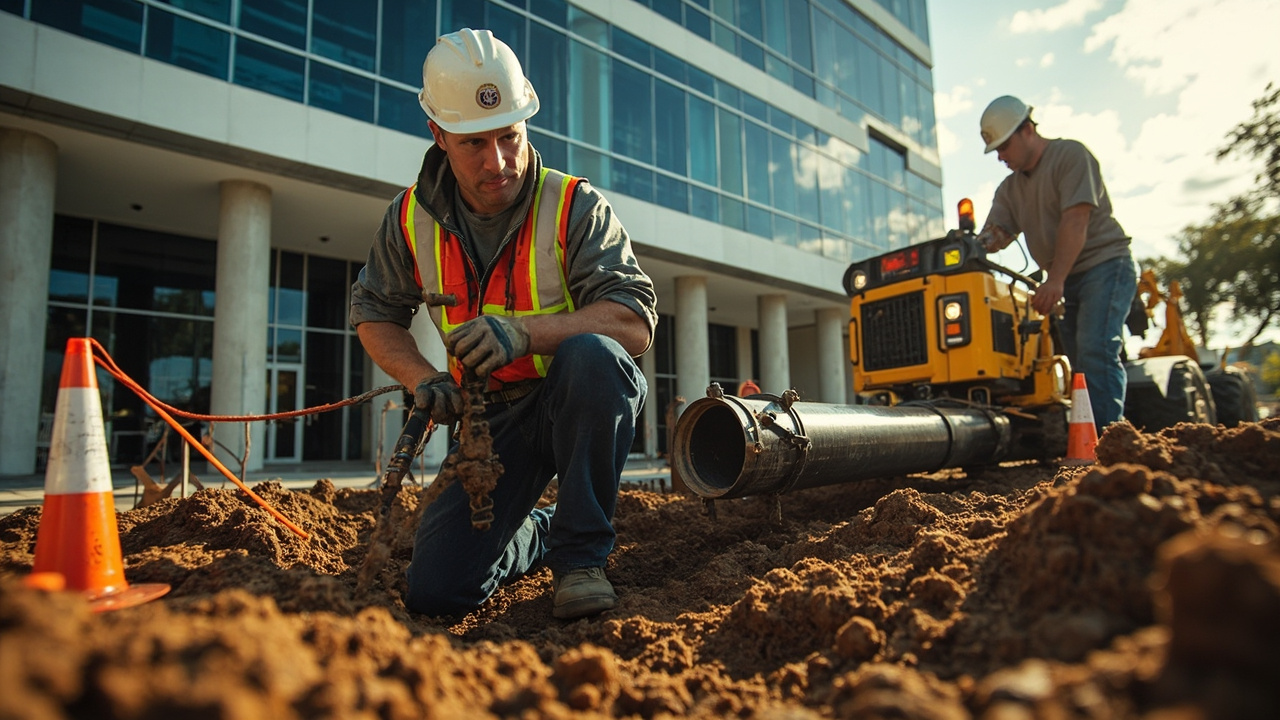
Miami sits on porous limestone bedrock with a water table that fluctuates between two and six feet below surface grade depending on season and proximity to Biscayne Bay. This hydrogeology creates two challenges for commercial sewer main repair. First, excavation below the water table requires continuous dewatering to maintain dry working conditions for pipe jointing and bedding. Second, the acidic groundwater common to South Florida erodes concrete and corrodes metallic piping faster than in other regions. Older commercial properties built before 1980 often have cast iron or clay tile sewer lines showing advanced deterioration. The combination of high humidity, salt air, and acidic soil creates an aggressive environment that accelerates pipe degradation. Business sewer line repair projects must account for these conditions during material selection and installation methodology.
Commercial properties in Miami also face unique permitting requirements due to the region's environmental sensitivity. Any excavation within designated flood zones or near coastal waters requires coordination with the South Florida Water Management District and may trigger stormwater management plan updates. Miami-Dade County enforces strict erosion control and sediment containment protocols during construction. Contractors unfamiliar with these local regulations create compliance problems that delay projects and expose property owners to enforcement actions. Cornerstone Plumbing Miami maintains established relationships with county building officials and environmental compliance staff, streamlining the approval process and ensuring that all industrial sewer line repair work meets jurisdictional requirements from the start.