




menu

Mold in Bathroom Cabinets in Miami – Expert Diagnosis and Permanent Plumbing Fixes

Stop the spread before it damages your walls. Our plumbers identify the hidden leak or ventilation failure causing mold in bathroom cabinets, then fix the source so it never returns.

Slider Image 1
Slider Image 2
Slider Image 3
Slider Image 4
Slider Image 5
Slider Image 7
Slider Image 8
Slider Image 9
Slider Image 10
Slider Image 11

Why Miami Bathrooms Breed Mold Inside Vanities and Cupboards

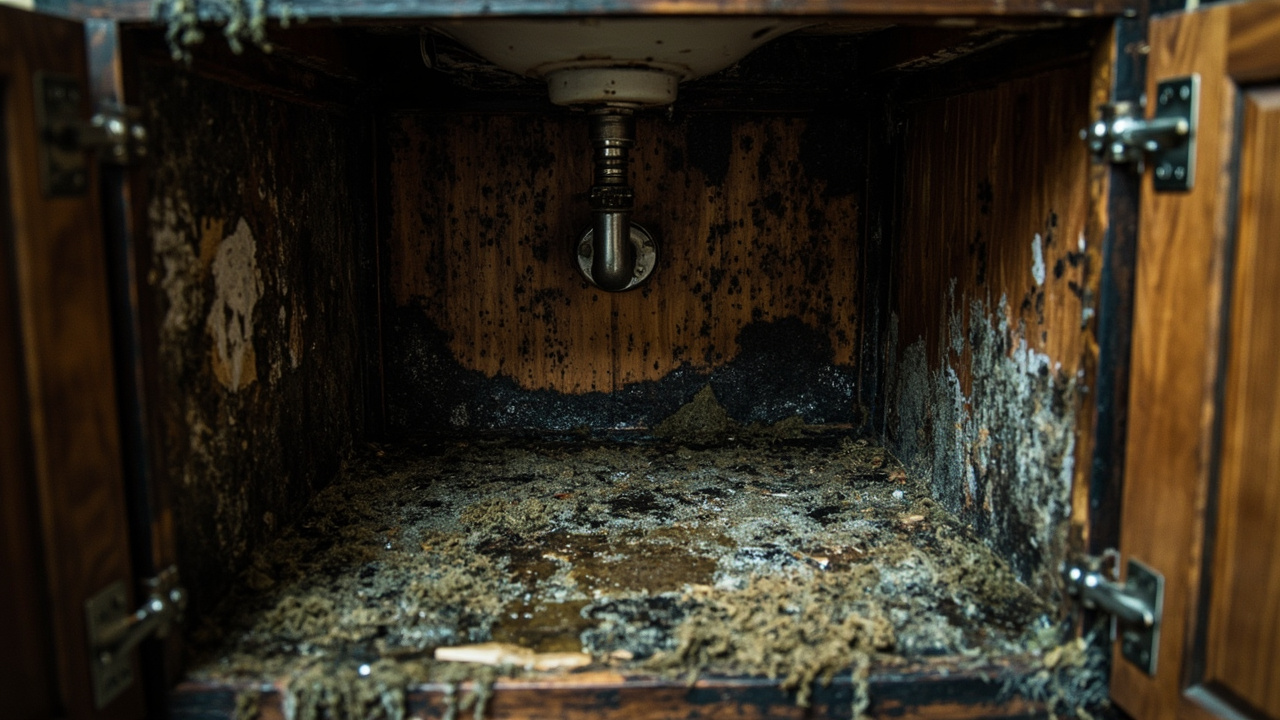
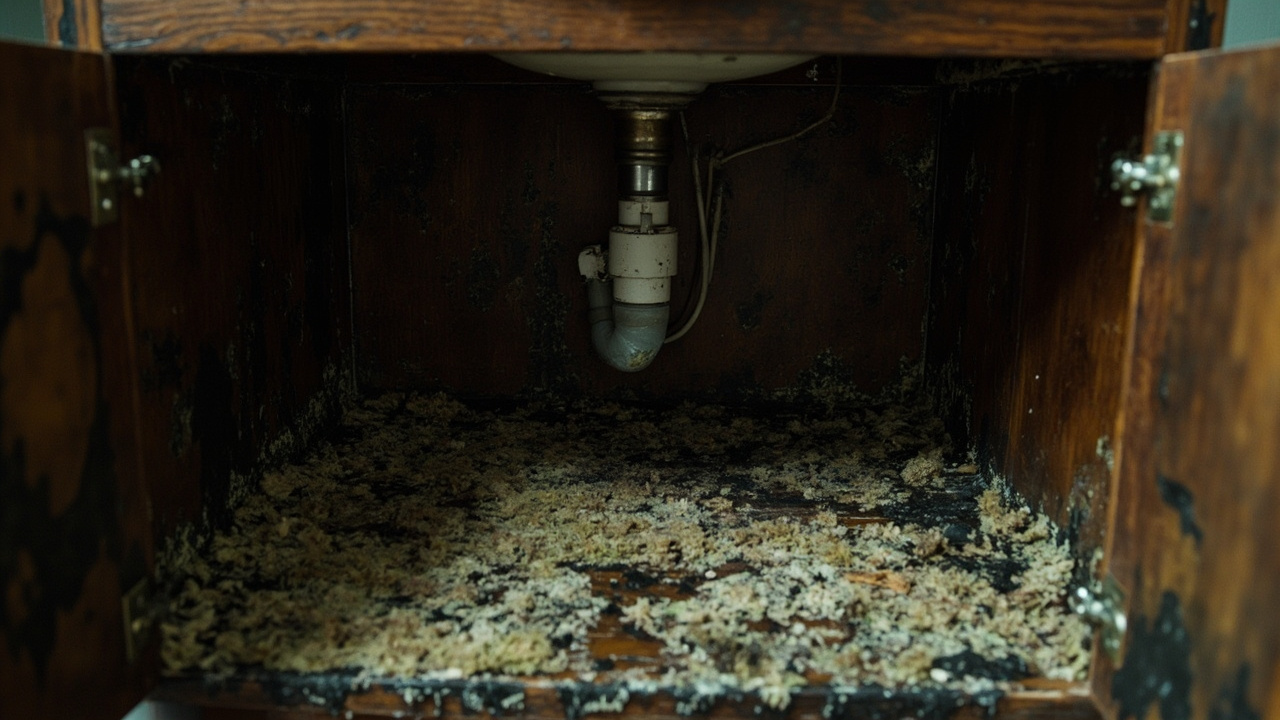
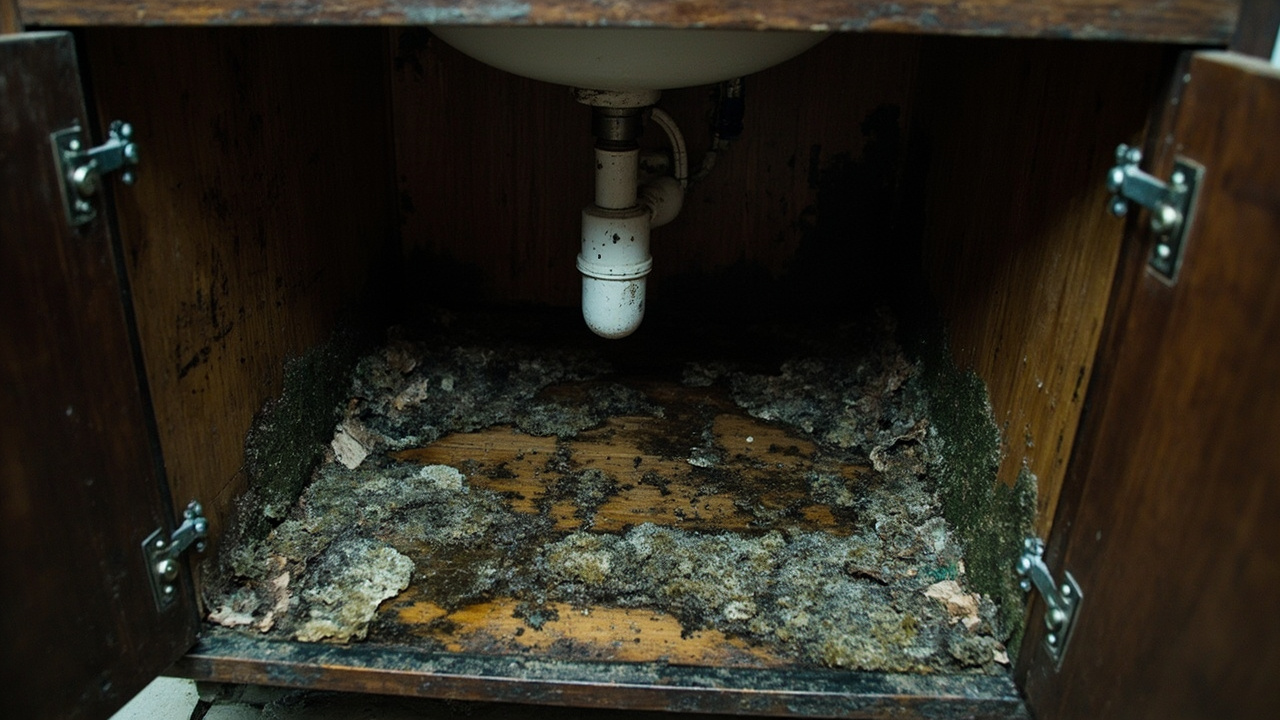
You open the cabinet under your sink and smell it before you see it. A damp, musty odor. Then you spot the black or green patches creeping across the cabinet floor, up the walls, or behind the pipes. Mold in bathroom cabinets is not just ugly. It signals a plumbing problem that will worsen if you ignore it.

Miami's subtropical humidity hovers above 70 percent year-round. Add a slow drip from a supply line, a sweating P-trap, or a hidden slab leak wicking moisture through the floor, and you create the perfect environment for bathroom vanity mold. Mildew in bathroom cabinets thrives when moisture has nowhere to go. Your vanity becomes a sealed box of damp air, especially if the exhaust fan vents into the attic instead of outside or if the cabinet backs up against an exterior wall with poor vapor barrier installation.

Mold under bathroom sink areas often starts with a corroded shut-off valve, a loose compression fitting, or a cracked drain tailpiece that drips just enough water to keep the cabinet damp but not enough to form a puddle you would notice. Bathroom cupboard mold also grows when a wax ring fails on the toilet next door and water seeps under the flooring, traveling laterally into adjacent cabinetry. Mold growth inside vanity units accelerates in older Miami homes with cast iron drain lines that pit and weep, or in condos with shared plumbing chases where a neighbor's leak migrates through the wall cavity into your cabinet.

You might wipe down the mold with bleach, but it returns within weeks because you are treating the symptom, not the cause. The source is always water. Until you stop the leak or eliminate the condensation, the mold will keep coming back.

Why Miami Bathrooms Breed Mold Inside Vanities and Cupboards
How We Identify and Eliminate the Plumbing Source of Cabinet Mold

How We Identify and Eliminate the Plumbing Source of Cabinet Mold

Mold remediation companies scrub surfaces. We fix the reason the mold appeared in the first place. When you call Cornerstone Plumbing Miami for mold in bathroom cabinets, we approach it as a plumbing forensics job. We do not assume. We inspect every water source, every joint, and every hidden cavity until we find the leak or condensation point.

We start with a visual inspection of all supply lines, shut-off valves, compression fittings, and drain tailpieces under the sink. We check for corrosion, mineral buildup, and pinhole leaks in copper or galvanized piping common in older Miami construction. We test the P-trap for cracks or loose slip nuts. We run water through the system and watch for drips that only appear under pressure.

Next, we inspect the drain line behind the wall. If the cabinet backs up against an exterior wall, we check for sweating pipes caused by temperature differentials between conditioned indoor air and Miami's outdoor heat. We use moisture meters to scan the cabinet floor, sidewalls, and drywall behind the vanity to map the extent of water intrusion. If the moisture reading is high but no active leak is visible, we investigate hidden sources like a failed wax ring on the adjacent toilet, a cracked shower pan leaking through the subfloor, or a roof leak dripping into the wall cavity.

Once we isolate the source, we repair it with precision. We replace corroded valves, re-sweat leaking joints, swap out cracked drain components, or reroute supply lines that sweat excessively. If the issue is ventilation-related, we verify your exhaust fan actually vents outside and recommend upgrades if it does not. We do not leave until the source is dead and the cabinet is dry.

What Happens When You Call Us About Moldy Bathroom Cabinets

Mold in Bathroom Cabinets in Miami – Expert Diagnosis and Permanent Plumbing Fixes
01

Moisture Mapping and Leak Detection

We arrive with moisture meters, infrared cameras, and pressure testing equipment to pinpoint the exact water source. We check supply lines, drain connections, and hidden wall cavities. We measure moisture levels in the cabinet floor, walls, and adjacent drywall to map the intrusion pattern. This tells us whether the leak is active, intermittent, or caused by condensation rather than a failed fitting.
02

Plumbing Repair and Source Elimination

We replace leaking shut-off valves, re-seat loose compression fittings, swap out cracked P-traps, or repair corroded drain tailpieces. If the issue is a hidden slab leak or a failed wax ring causing lateral water migration, we address that root cause. We do not patch. We eliminate the water source permanently so mold cannot return. Every repair meets Miami-Dade building code and uses materials rated for high-humidity environments.
03

Drying and Prevention Guidance

After the repair, we confirm the cabinet is dry using moisture meters. We explain what caused the mold and how to prevent recurrence. This might include improving exhaust fan performance, insulating cold water lines to prevent sweating, or installing a cabinet vent to improve airflow. We give you a clear diagnosis in writing so you can coordinate mold remediation with confidence, knowing the source is fixed.

Why Miami Homeowners Trust Cornerstone Plumbing Miami for Cabinet Mold Issues

Most plumbers walk away after replacing a valve. We stay until we understand why the valve failed and whether other risks exist. Mold in bathroom cabinets is a symptom of a deeper problem, and we have the diagnostic tools and local experience to find it.

Miami's plumbing systems face unique stresses. Saltwater intrusion corrodes copper and brass fittings faster than in inland cities. High water table areas like Miami Beach, Coral Gables, and parts of Kendall experience hydrostatic pressure that can push groundwater through concrete slab foundations, creating phantom moisture problems that look like leaks but are actually seepage. Older homes in Little Havana and Coconut Grove still have galvanized steel supply lines that rust from the inside out, causing slow leaks that go unnoticed for months while mold spreads.

We know these patterns because we work in these neighborhoods every day. We understand how Miami-Dade building codes evolved after Hurricane Andrew and why post-1994 homes have different plumbing configurations than older construction. We recognize the symptoms of polybutylene piping failures common in 1980s condos along Brickell and the signs of electrolysis corrosion in homes with mixed metal plumbing.

When you call Cornerstone Plumbing Miami, you get a plumber who treats mold as a clue, not a cosmetic issue. We do not upsell services you do not need. We tell you what we found, what it will take to fix it, and what you should watch for in the future. We document our findings so you can make informed decisions about mold remediation, insurance claims, or cabinet replacement.

You can wipe down mold a hundred times, but if the plumbing is still leaking, you are wasting your time and risking your health. We fix the source so you can fix the mold for good.

What to Expect When We Investigate Mold in Your Bathroom Cabinets

Same-Day Inspection Availability

Mold spreads fast in Miami's heat and humidity. We offer same-day inspection scheduling so you can stop the progression before it damages adjacent walls or spreads spores into your HVAC system. When you call, we ask targeted questions about when you first noticed the mold, whether you smell musty odors elsewhere, and if you have seen water pooling. This helps us bring the right diagnostic tools on the first trip. Most inspections take 45 to 90 minutes depending on the complexity of your plumbing layout.

Comprehensive Leak and Moisture Assessment

We do not guess. We use moisture meters to scan the cabinet interior, infrared cameras to detect temperature anomalies behind walls, and pressure testing to verify supply line integrity. We inspect every connection point, check for sweating pipes, and evaluate drain line slope and venting. If we suspect a hidden issue like a slab leak or a roof leak dripping into the wall cavity, we tell you immediately and outline next steps. You receive a verbal explanation during the visit and a written summary of our findings so you have documentation for remediation contractors or insurance.

Permanent Plumbing Repairs, Not Temporary Patches

We replace failed components with high-quality parts rated for Miami's corrosive water and high humidity. If your shut-off valve is corroded, we install a quarter-turn ball valve that will not seize. If your P-trap is cracked, we replace it with schedule 40 PVC or ABS depending on your system. If the issue is a sweating cold water line, we insulate it with closed-cell foam to eliminate condensation. Every repair meets current Miami-Dade code. We test the system under normal operating pressure before we leave to confirm the leak is eliminated.

Prevention Guidance and Follow-Up Recommendations

After we fix the leak, we explain what caused it and how to prevent future mold growth. This might include improving bathroom ventilation by upgrading your exhaust fan or ensuring it vents outside rather than into the attic. We might recommend installing a small cabinet vent or leaving the cabinet door ajar after showers to improve airflow. If we found corrosion or mineral buildup, we discuss water quality issues and filtration options. We do not upsell. We give you the information you need to make smart decisions about your home's plumbing health.

Frequently Asked Questions

You Have Questions,
We Have Answers

Why is there mold in my bathroom cabinet? +

Mold grows in your bathroom cabinet because Miami's high humidity creates the perfect environment. Cabinets trap moisture from showers, leaky pipes, or poor ventilation. When humid air meets cooler surfaces inside the cabinet, condensation forms. This moisture feeds mold spores already present in your home. Darkness and lack of airflow make it worse. Check under your sink for slow drips or failed caulking around pipes. Even small leaks you cannot see can saturate cabinet interiors. Miami's year-round humidity means you need active moisture control, not just better cleaning habits.

Will mold go away if it dries out? +

No. Mold does not die when it dries out. It goes dormant. The spores remain viable and will reactivate the moment moisture returns. In Miami, that happens fast. Dried mold is actually more dangerous because disturbing it releases airborne spores into your bathroom. You breathe these in. Simply letting a moldy cabinet dry does nothing to remove the contamination. The mold structure, spores, and mycotoxins stay embedded in porous materials like wood and drywall. You need physical removal and treatment with fungicides to eliminate mold, not just ventilation.

Do moldy cabinets need to be replaced? +

It depends on how deep the mold penetrated. Surface mold on painted or sealed wood can sometimes be cleaned and treated. But if mold reached the bare wood or particleboard core, replacement is safer. Porous materials absorb mold deep into the fibers where cleaning cannot reach. Miami's humidity makes this worse because moisture wicks into unsealed wood fast. If you see black staining, warping, or soft spots, the cabinet is compromised. Replacing moldy cabinets also eliminates hidden contamination that keeps reappearing. A professional inspection can determine if treatment or replacement is needed.

Do you have to throw away everything after mold? +

Not always. Hard, non-porous items like glass, metal, and plastic can be cleaned and disinfected. Porous items like fabric, cardboard, paper, and unsealed wood usually need disposal. Mold penetrates these materials too deeply for surface cleaning to work. In Miami, stored items in humid cabinets absorb moisture and mold faster. If items smell musty or show visible mold, throw them out. Do not risk your health trying to save low-value belongings. High-value items like documents or heirlooms may be salvageable with professional restoration, but act fast before mold damage becomes permanent.

What are the first signs of mold sickness? +

Early mold sickness mimics allergies or a cold. You might notice persistent sneezing, runny nose, itchy eyes, or throat irritation. Coughing and wheezing are common, especially if you have asthma. Some people get headaches, fatigue, or difficulty concentrating. Skin rashes can develop from direct contact with moldy surfaces. Miami residents often dismiss these symptoms as seasonal allergies, but if they worsen at home and improve when you leave, mold is the likely cause. Prolonged exposure can lead to respiratory infections or worsen existing conditions. If symptoms persist, see a doctor and inspect your home.

What kills mold in cabinets? +

A mix of bleach and water kills surface mold on non-porous cabinet surfaces. Use one cup of bleach per gallon of water. Vinegar works on lighter contamination but is less effective on deep growth. Hydrogen peroxide is another option. Spray the solution, let it sit for 10 minutes, then scrub and dry completely. Miami's humidity means you must also fix the moisture source or mold returns. Bleach does not penetrate porous wood, so it only treats surface growth. For heavy contamination or mold inside cabinet walls, you need professional remediation with antimicrobial treatments.

What kills mold permanently? +

Nothing kills mold permanently if moisture remains. Mold removal requires two steps. First, physically remove contaminated materials or treat surfaces with fungicides like bleach, borax, or antimicrobial sprays. Second, eliminate the moisture source. In Miami, that means fixing leaks, improving ventilation, and controlling indoor humidity below 60 percent. Encapsulants can seal treated surfaces to prevent regrowth, but only after thorough cleaning. Mold spores exist everywhere. You cannot eliminate them from the environment. Permanent control means denying mold the moisture it needs to grow. Without moisture, mold cannot establish colonies.

Will a dehumidifier get rid of mold? +

A dehumidifier prevents mold growth but does not remove existing mold. Lowering humidity below 60 percent stops new spores from colonizing surfaces. In Miami, dehumidifiers are critical because outdoor humidity often exceeds 70 percent. Running one in your bathroom helps, but you must still physically remove existing mold. Dehumidifiers work best in enclosed spaces with closed doors and windows. They reduce moisture in the air, but they cannot dry out saturated wood or drywall. Use a dehumidifier as part of a broader strategy that includes fixing leaks, improving ventilation, and cleaning contaminated areas.

Does wiping mold release spores? +

Yes. Wiping mold disturbs the colonies and releases airborne spores. These spores spread to other areas and can be inhaled, causing respiratory irritation or allergic reactions. In Miami's humid climate, airborne spores quickly colonize new surfaces. If you must wipe mold yourself, wear an N95 mask, gloves, and eye protection. Lightly mist the area with water or cleaner before wiping to minimize spore release. Bag contaminated rags immediately and seal them. Avoid dry brushing or vacuuming mold without a HEPA filter. For large areas, professional remediation uses containment barriers and air scrubbers to control spore spread.

Can you just wipe off black mold? +

Wiping off black mold only removes surface growth. Spores and roots remain embedded in porous materials. Black mold, often Stachybotrys, produces mycotoxins that linger even after visible mold is gone. Simply wiping spreads spores into the air and onto other surfaces. In Miami, moisture quickly reactivates remaining spores. For small patches on non-porous surfaces like tile or sealed wood, wiping with bleach or fungicide can work temporarily. But if black mold covers large areas or penetrated drywall or wood, you need professional remediation. Do not underestimate black mold. It indicates a serious moisture problem requiring immediate attention.

Why Miami's Humidity and Water Chemistry Make Bathroom Cabinet Mold a Plumbing Priority

Miami's average relative humidity stays above 70 percent year-round, and bathroom humidity spikes above 90 percent during showers. When that moisture meets a cold water supply line running through your vanity cabinet, condensation forms and drips onto the cabinet floor. Add a slow leak from a corroded shut-off valve or a loose compression fitting, and you create standing water that never fully evaporates. Miami's water chemistry also accelerates corrosion. The municipal supply is hard, with dissolved minerals that pit copper and brass over time. Coastal homes deal with additional saltwater intrusion that eats through fittings faster than in inland cities. Bathroom cupboard mold and mildew in bathroom cabinets are not cosmetic issues here. They are warning signs of active plumbing failure.

Cornerstone Plumbing Miami understands how local construction methods and materials interact with our climate. We know that pre-Hurricane Andrew homes often lack proper vapor barriers behind bathroom walls, and that many older condos in Brickell and Miami Beach still have polybutylene supply lines that fail without warning. We work with local mold remediation teams and understand Miami-Dade permitting requirements for plumbing repairs. When you hire a plumber who knows your neighborhood, you get faster diagnosis, better recommendations, and repairs that last in this environment. Mold growth inside vanity cabinets is fixable, but only if you address the plumbing source first.

Plumbing Services in The Miami Area

Easily locate Cornerstone Plumbing on the map and explore our primary service area. We are conveniently situated to provide swift and efficient plumbing services throughout Miami and its surrounding communities. Our strategically located operations ensure that a skilled technician is always nearby, ready to address your residential or commercial plumbing needs with promptness and unparalleled expertise, ensuring you receive timely and effective support whenever you need it most.

Address:
Cornerstone Plumbing Miami, 2332 Galiano St, Miami, FL, 33134

Additional Services We Offer

Our news updates

Latest Articles & News from The Blogs

A main water line break in a high traffic area like the Wynwood Art District is more than a simple…

Emergency Main Water Line Repair for Wynwood Businesses

A main water line break in a high traffic area like the Wynwood Art District is more than a simple…

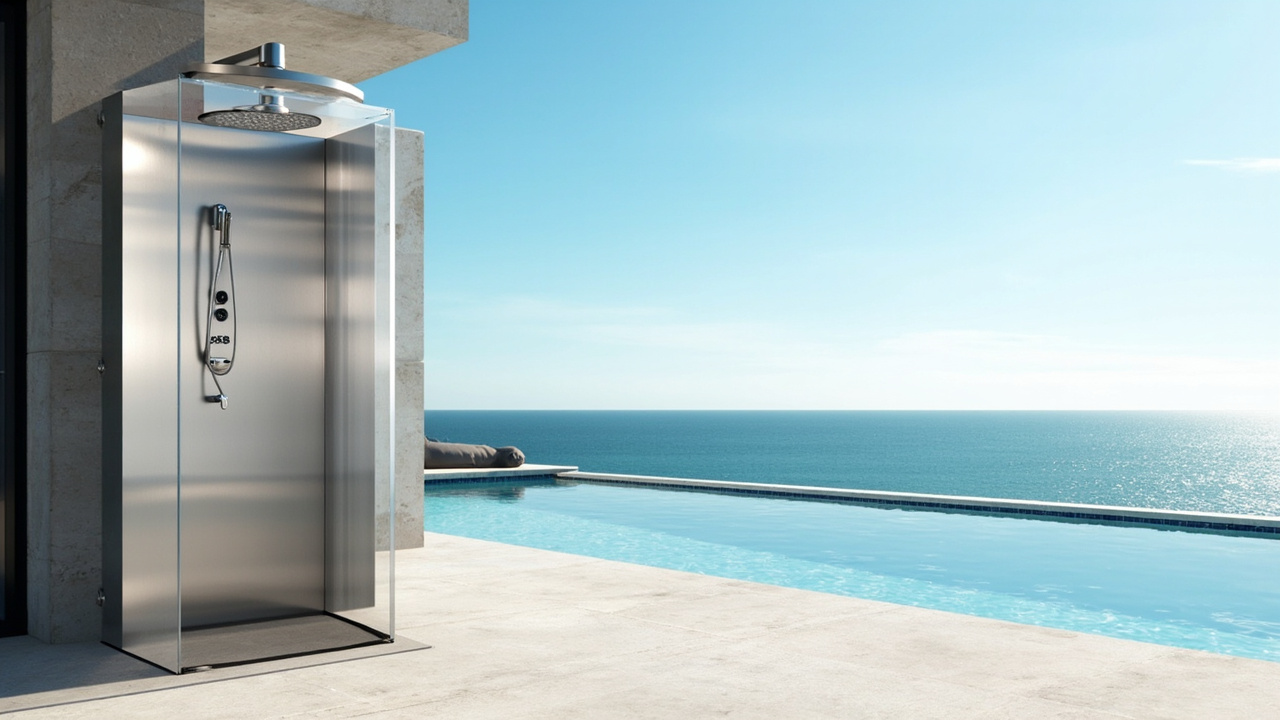
Picking the Right Type of Outdoor Shower for Your Golden Beach Waterfront Property

Living on the Atlantic coast in Golden Beach provides unparalleled access to the ocean, but the environment creates a unique…

How to Choose the Right Low Flow Showerhead That Still Has Great Pressure

How to Choose the Right Low Flow Showerhead That Still Has Great PressureMiami residents understand the value of water more…

Contact Us

Do not let a hidden drip destroy your cabinets and walls. Call Cornerstone Plumbing Miami at (786) 789-8488 for same-day mold source inspection. We find the leak, fix it right, and give you the documentation you need to move forward with confidence.